

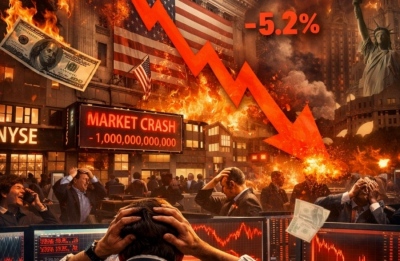
Whether US President Donald Trump shouts “enough” to the war with Iran tomorrow or the conflict drags on, the economic damage has already been done on many fronts
For the world’s leading economic powers, returning to some form of normality is easier to announce than to implement.
The constantly simmering risk of Iranian retaliation will now become an almost permanent element in geopolitical risk analysis for the foreseeable future.
However, the damage to economic confidence may prove to be an even more long term side effect.
In less than 14 months, the Trump 2.0 administration has shifted the Overton window of public opinion, meaning what kinds of shocks are possible to originate from Washington.
The Overton window is a concept of political theory that describes the range of ideas and policies considered socially acceptable at a given moment.
From now on, investors will calculate which “Black Swan” type event, in simple terms an indication of systemic collapse, may be revealed in the next message of Trump on social media.
These threats, as well as the invisible risks that the world of Trump may create over the next more than 1,000 days, will complicate financial decisions and trading strategies as long as he remains in power.
In other words, it will be extremely difficult to recall or forget a period of 56 days during which people of the US president secretly transferred the leader of Venezuela to a prison cell in New York and neutralized the Iranian leadership, while the Congress shrugged its shoulders.
And all of this is added to the confusion and the still intense anger over the chaos of Trump’s tariffs.
And these are only the blows caused by Trump abroad.
At home, the coming consequences of the war with Iran remind that “this administration is causing a sequence of supply shocks,” says Tim Mahedy, former economist of the Federal Reserve Bank of San Francisco, to The New York Times.
This comes on top of two other very significant supply shocks, tariffs and immigration policy.
If the conflict with Iran continues for months, says economist Kathy Bostjancic of Nationwide Financial, it could hit business confidence, leading households and companies toward a collapse of consumption and investment.
The United States flirting with pariah status
“When new uncertainty is introduced into the business environment, this is a blow to confidence,” she notes.
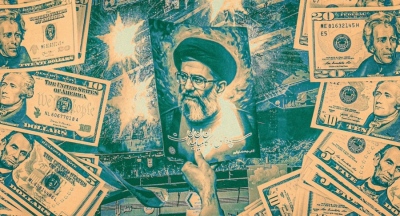
At the same time, what are the chances that Mojtaba Khamenei, the new supreme leader of Iran, will accept a reversal by Trump, reopen the Strait of Hormuz, and simply move on?
The successor of his father, Ali Khamenei, who was killed on the first day of the war between the US, Israel, and Iran, may not have the willingness for forgiveness that the environment of Trump seems to assume.
The attacks reportedly killed his mother, his wife, and one son of Khamenei, as well as several top Iranian officials.
However, the real shock in the long term may be a sudden and irreversible loss of confidence in the dollar and in US government bonds.
A leader of a G7 economy actively flirting with “pariah” status is something new for the world.
The same applies to a financial superpower that for decades set the rules internationally and now burns so provocatively the “exorbitant privilege” that still allows it to sell 10 year US debt with a yield of 4.1%.
Despite maintaining its dominance, the share of the dollar has declined significantly compared with 25 years ago, a development that strengthens the analysis about the weakening of the system’s main currency.
The conflict with the Federal Reserve
As the war in Iran threatens to cause inflation to rise to levels of the 1970s, Trump is weakening the institutions responsible for price stability.
A characteristic example is his continuous pressure to transform the Federal Reserve into the American equivalent of the People’s Bank of China.
Although Trump pressured the Fed during his first presidency (2017–2021), the Trump 2.0 team has truly raised the intensity.
First by trying to dismiss or indict the Fed chairman Jerome Powell. Then by attempting to remove Fed governor Lisa Cook.
And then by placing loyalists to Trump on the board of the Fed, including the White House economist Stephen Miran.
A “MAGA-ized” Fed could become a nightmare for the global financial system, despite efforts to replace the dollar and US bonds as the foundation of the global economy.
The risk is that Trump’s policies could frighten officials in Tokyo and Beijing, who manage a combined 1.9 trillion dollars in US government debt.
In January, Deutsche Bank provoked the anger of US Treasury Secretary Scott Bessent when one of its strategic analysts warned that foreign investors could use their US holdings as leverage against Trump’s threats regarding Greenland or as retaliation for reciprocal tariffs.
The deterioration of the fiscal position
In the first year of his second term, Trump has indeed acted actively to undermine confidence in the dollar.
He has pushed nominal debt above 38 trillion dollars, attacked the Fed, imposed heavy tariffs on friends and enemies, and caused global turbulence with uncontrolled geopolitical adventurism.
These policies have pushed the dollar and US bond yields into a “cardiogram” state.
Officials in Beijing, especially in the People’s Bank of China, are concerned about the safety of the approximately 950 billion dollars in US bonds held by Beijing and Hong Kong.
UBS economist Paul Donovan notes that even if China does not threaten to unload its official dollar reserves, “the idea that international investors may be less willing to buy US bonds in the future without selling existing ones is beginning to concern markets”.
This may change as the consequences of the war in Iran complicate Trump’s plans for a weaker dollar and cause greater conflict with the Fed.
So far, despite Trump’s domestic fiscal moves, the dollar still plays its traditional role as a “safe haven”, keeping the US exchange rate stronger than Trump would prefer.
In February, US jobs unexpectedly declined by 92,000 and the unemployment rate rose to 4.4%.
Inflation and interest rates
As Trump’s “raid” on Iran, as he calls it, pushes inflation higher, employment data “may have placed the Fed between a rock and a hard place,” notes Ellen Zentner of Morgan Stanley Wealth Management.
The term of Jerome Powell expires in mid May.
Trump hoped that his successor, Kevin Warsh, would promote large interest rate cuts from the beginning.
This is now very doubtful.
The interest rate preferred by Trump, close to 1%, may face strong resistance. The minutes of the January meeting of the Federal Open Market Committee showed that “several” members believed that rate increases might be needed.
The “hawks” are strengthening as the inflationary consequences of the war in Iran increase.
However, it is not clear that Trump will show patience.
In January he proposed that the state backed organizations Fannie Mae and Freddie Mac purchase 200 billion dollars in mortgage backed securities.
This is a financing role that would normally be undertaken by the Fed during periods of crisis in credit markets.
Trump’s proposal, which appeared as an attempt to bypass the Fed in order to weaken the dollar, was considered by many as a way to reintroduce quantitative easing (QE).
Economist Mohamed El-Erian of Allianz called it “QE of the people”.
Trump’s targeting of a weaker dollar also suggests that he knows little about how decades of Japan’s weak yen policy have begun to boomerang on the second largest economy of Asia.
“Mar-a-Lago Agreement” and the impossible target
Part of the problem is the practice of 1985.
At that time the leading industrial countries could agree in a room at the Plaza Hotel in New York to weaken the dollar.
Forty years later, his desire for a “Mar a Lago Agreement” attempts to recreate a global trade dynamic that no longer exists, especially when a large portion of global wealth now lies in the broader world of BRICS (Brazil, Russia, India, China, South Africa), including oil producing countries such as Saudi Arabia and the United Arab Emirates.
Nevertheless, Trump’s top economic officials, such as Scott Bessent, seem not to have convinced him why Washington’s “exorbitant privilege”, meaning the ability to issue debt at very low yields, is an enormous advantage for America.
Could all of this culminate in 2026?
Even the May decision by Moody’s Investors Service to remove Washington’s last AAA rating caused little reaction in bond markets. The general response was that the dollar, for better or worse, remains the main currency of the global system, for now.
China of Xi Jinping, meanwhile, sees an opportunity to present the largest economy of Asia as a more reliable superpower and more committed to free trade.
Increasingly, Xi’s team probably cannot believe its luck as Trump undermines the world’s largest economy and a currency that China aspires to replace.
Of course, China faces enormous challenges: a large real estate crisis fueling deflation, weak domestic demand, swollen local government debt, and high youth unemployment.
And a decade after the attempt by Xi Jinping to internationalize the yuan, China’s currency represents only 2% of global foreign exchange reserves, compared with 57% for the dollar and about 20% for the euro.
Dreams of “safe haven” status are also contradicted by the strict capital controls on flows to and from China.
However, Trump does not need to make things so easy for China.
Last year he became furious at reports that BRICS were considering creating an alternative currency to the dollar, to the point of threatening 100% tariffs if the bloc and the broader Global South proceed with the idea.
Markets weigh their options
Diana Choyleva, chief economist of Enodo Economics, notes that most market commentary still treats the economy, geopolitics, the risk of hot conflicts, politics, and technology as separate sectors examined sequentially.
In calmer times this habit was simply incomplete.
In today’s environment it is becoming increasingly dangerous.
“Think about the current conflict,” she says.
“The immediate reaction of markets was the familiar one: oil prices, risk to shipping in the Persian Gulf, inflation expectations, and central bank reactions.
All of these matter, but they are only the first level”.
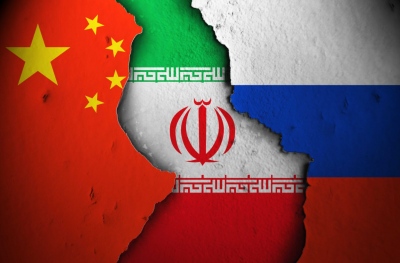
However, she adds, the most important effects lie one step further. “The conflict with Iran changes the strategic balance between the United States and China, strengthens the alignment of Iran, China, and Russia, reshapes energy power, and forces countries from Saudi Arabia to Taiwan to reconsider their position.
These shifts will affect markets far more next year than the first rise in oil prices”.
The same will apply to whether the moves of Trump during the past 56 days will lead the world to turn massively away from the United States and American assets.
www.bankingnews.gr






Σχόλια αναγνωστών